When temperatures drop, nothing soothes like a steaming bowl of soup. But why settle for store-bought versions loaded with sodium and preservatives? Healthy soup recipes for cold weather deliver warmth, flavor, and essential nutrients—without the guilt. Whether you’re battling a chill or simply craving comfort, these nourishing soups are designed to boost immunity, support digestion, and keep you energized all season long. From hearty vegetable stews to protein-packed lentil broths, we’ve curated a collection that’s as good for your body as it is for your soul.
Why Healthy Soups Belong in Your Winter Diet
Winter isn’t just about bundling up—it’s also about fueling your body with the right foods. Soups made from whole, unprocessed ingredients offer a powerhouse of benefits. They’re hydrating, easy to digest, and packed with vitamins and minerals that support immune function during cold and flu season.
Unlike creamy, cream-based soups that can be heavy and calorie-dense, healthy soup recipes for cold weather focus on broth-based or lightly thickened versions using vegetables, legumes, and lean proteins. These choices help maintain energy levels without causing sluggishness. Plus, the slow simmering process extracts maximum flavor and nutrients from ingredients like garlic, ginger, turmeric, and leafy greens—all known for their anti-inflammatory properties.
Key Nutritional Benefits of Winter Soups
- High in fiber: Vegetables and legumes promote gut health and keep you full longer.
- Rich in antioxidants: Ingredients like carrots, kale, and tomatoes fight oxidative stress.
- Low in added sugars: Homemade soups avoid the hidden sugars found in many commercial brands.
- Supports hydration: Broth-based soups contribute to daily fluid intake, especially important in dry, heated indoor environments.
Top 5 Healthy Soup Recipes for Cold Weather
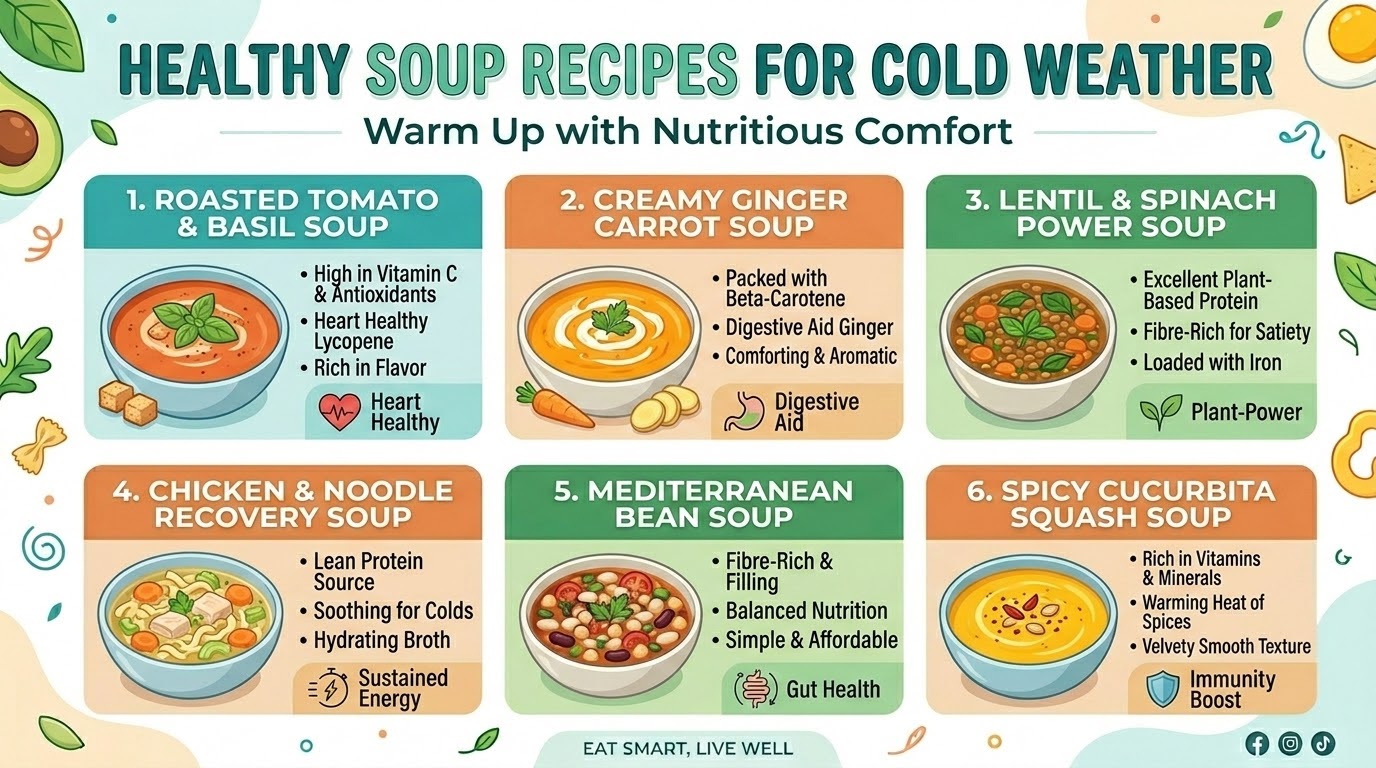
Ready to warm your kitchen and your body? These five soup recipes are simple, nutritious, and perfect for chilly days. Each one uses seasonal ingredients and can be prepared in under an hour—ideal for busy weeknights or lazy weekend afternoons.
1. Immune-Boosting Chicken and Vegetable Soup
This classic gets a healthy upgrade with bone broth, turmeric, and a rainbow of vegetables. Bone broth adds collagen and amino acids that support joint and gut health, while turmeric’s curcumin content helps reduce inflammation.
Ingredients: Boneless chicken breast, low-sodium bone broth, carrots, celery, onions, garlic, kale, turmeric, thyme, black pepper.
Method: Sauté onions, garlic, carrots, and celery until softened. Add broth, chicken, and spices. Simmer for 25 minutes, then shred the chicken and stir in kale until wilted. Serve hot with a squeeze of lemon for extra vitamin C.
2. Creamy Butternut Squash and Ginger Soup
Sweet, velvety, and naturally dairy-free, this soup is a winter favorite. Butternut squash is rich in beta-carotene, while fresh ginger adds a warming kick and aids digestion.
Ingredients: Roasted butternut squash, vegetable broth, onion, fresh ginger, garlic, coconut milk (optional for creaminess), nutmeg, salt, and pepper.
Method: Sauté onion and ginger, add roasted squash and broth, and simmer for 15 minutes. Blend until smooth, stir in coconut milk if desired, and season to taste. Garnish with pumpkin seeds for crunch and healthy fats.
3. Lentil and Kale Stew with Tomatoes
Packed with plant-based protein and iron, this hearty stew is a vegetarian powerhouse. Lentils cook quickly and absorb flavors beautifully, making them ideal for soups.
Ingredients: Green or brown lentils, diced tomatoes, vegetable broth, onion, garlic, carrots, kale, cumin, smoked paprika, bay leaf.
Method: Cook lentils in broth with onions, garlic, and spices until tender. Stir in kale and tomatoes in the last 10 minutes. Serve with a dollop of plain Greek yogurt or a sprinkle of fresh parsley.
4. Spicy Black Bean and Sweet Potato Soup
This vibrant soup combines the sweetness of roasted sweet potatoes with the boldness of black beans and chili spices. It’s fiber-rich, satisfying, and naturally gluten-free.
Ingredients: Sweet potatoes, black beans (canned or cooked), vegetable broth, onion, garlic, chili powder, cumin, lime juice, cilantro.
Method: Roast cubed sweet potatoes until tender. Sauté onions and spices, add broth, beans, and roasted potatoes. Simmer for 15 minutes, then blend half for a creamy texture. Finish with lime and cilantro.
5. Miso and Tofu Noodle Soup
Inspired by Japanese cuisine, this light yet deeply flavorful soup is perfect for a quick, restorative meal. Miso paste provides probiotics, while tofu adds plant-based protein.
Ingredients: Low-sodium miso paste, vegetable broth, firm tofu, shiitake mushrooms, bok choy, scallions, ginger, soba or rice noodles.
Method: Simmer broth with ginger and mushrooms. Cook noodles separately. Stir miso into hot broth (do not boil to preserve probiotics), then add tofu and bok choy. Serve over noodles and top with scallions.
Tips for Making Healthier Soups at Home
Creating healthy soup recipes for cold weather doesn’t require fancy techniques—just smart ingredient choices and a few kitchen tricks.
Start with a base of homemade or low-sodium broth to control salt levels. Use fresh herbs and spices instead of relying on salt for flavor. Add a variety of colorful vegetables to maximize nutrient diversity—think red peppers, spinach, zucchini, and beets.
For creaminess without heavy cream, try blending in cooked cauliflower, white beans, or a splash of unsweetened almond milk. Avoid refined grains; opt for whole grain noodles or serve soups over quinoa or brown rice for added fiber.
Batch cooking is another pro tip. Soups freeze beautifully, so make a double portion and store in portion-sized containers for quick, healthy meals throughout the week.
Seasonal Ingredients That Shine in Winter Soups
Winter offers a bounty of nutrient-dense produce that’s perfect for soups. Root vegetables like parsnips, turnips, and carrots become sweeter after a frost, adding natural sweetness to broths. Dark leafy greens such as kale, Swiss chard, and collards hold up well during cooking and deliver a punch of vitamins A, C, and K.
Legumes like lentils, chickpeas, and beans are pantry staples that add texture and protein. Canned versions are convenient, but dried beans soaked and cooked at home contain fewer additives and more fiber.
Don’t forget aromatics: garlic, onions, ginger, and leeks form the flavor foundation of most soups. These ingredients not only enhance taste but also offer immune-boosting compounds like allicin and quercetin.
Key Takeaways
- Healthy soup recipes for cold weather combine warmth, nutrition, and flavor using whole, seasonal ingredients.
- Broth-based soups with vegetables, legumes, and lean proteins support immunity and digestion.
- Homemade soups allow control over sodium, sugar, and additives—key for long-term health.
- Freezer-friendly recipes make meal prep easy and sustainable throughout winter.
- Spices like turmeric, ginger, and garlic add therapeutic benefits beyond taste.
FAQ: Your Questions About Healthy Winter Soups, Answered
Can I freeze healthy soup recipes for later use?
Yes! Most soups freeze exceptionally well for up to three months. Cool completely before transferring to airtight containers or freezer bags. Leave room for expansion. Thaw in the refrigerator overnight and reheat on the stove or in the microwave. Cream-based soups may separate slightly—just stir well when reheating.
Are canned beans and vegetables healthy for soups?
Canned beans and vegetables are convenient and still nutritious, especially when labeled “no salt added” or “low sodium.” Rinse beans before use to reduce sodium by up to 40%. Choose BPA-free cans when possible. For peak freshness and flavor, however, fresh or frozen produce is ideal when in season.
How can I make my soup more filling without adding heavy cream?
Add protein and fiber to increase satiety. Include lentils, chickpeas, tofu, or shredded chicken. Stir in a spoonful of nut butter or tahini for richness. Serve with a side of whole grain bread or a small salad. These additions keep you full longer without relying on heavy dairy.
Final Thoughts: Soup as Self-Care in Cold Weather
Healthy soup recipes for cold weather are more than just meals—they’re acts of self-care. The gentle simmer of a pot on the stove fills your home with comforting aromas, while each spoonful delivers nourishment and warmth from the inside out.
By choosing whole, seasonal ingredients and avoiding processed shortcuts, you create dishes that support your body’s needs during the colder months. Whether you’re sipping a spicy black bean soup on a snowy evening or enjoying a creamy squash blend by the fire, these recipes remind us that comfort food can also be deeply healthy.
So grab your favorite pot, gather your ingredients, and let the healing power of soup carry you through winter—one warm, wholesome bowl at a time.
About the Author