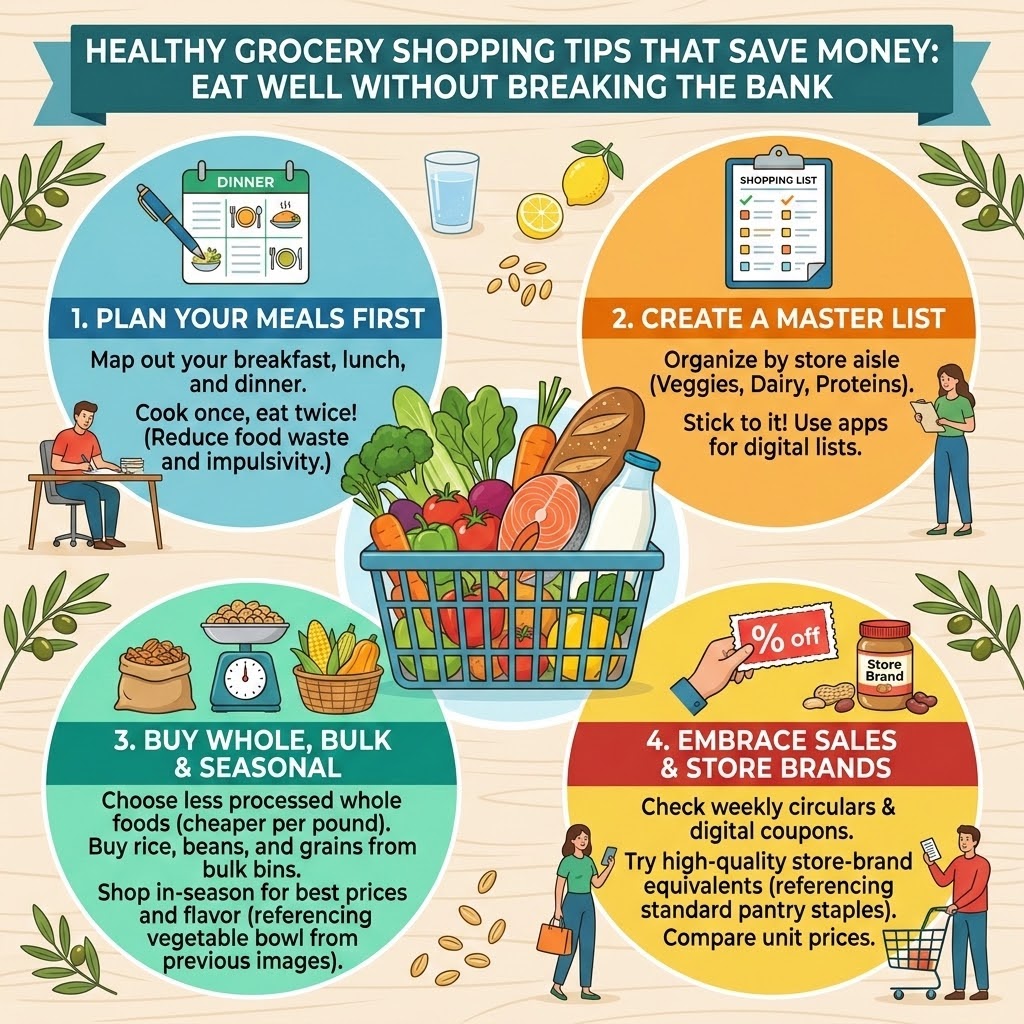
Struggling to eat healthy while sticking to a tight budget? You’re not alone. Many people believe that nutritious food comes with a hefty price tag, but that’s a myth. With the right healthy grocery shopping tips that save money, you can fill your cart with wholesome, nutrient-dense foods without overspending. Whether you’re feeding a family or cooking for one, smart strategies like planning meals, buying in bulk, and choosing seasonal produce can slash your grocery bill while boosting your health. This guide delivers practical, proven methods to help you shop smarter, eat better, and keep more cash in your pocket.
Plan Your Meals and Make a Smart Shopping List
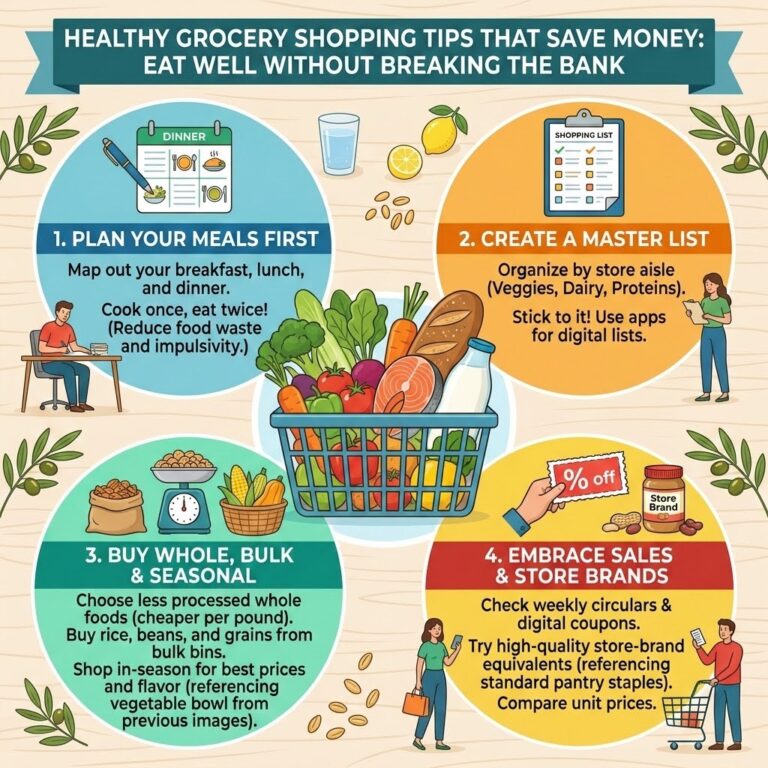
One of the most effective ways to save money on groceries is to plan your meals in advance. Without a plan, impulse buys and last-minute takeout become tempting—and expensive. Start each week by creating a simple meal plan based on what’s already in your pantry and what’s on sale at your local store.
Once you’ve mapped out your meals, make a detailed shopping list. Stick to it religiously. This prevents unnecessary purchases and reduces food waste. According to the USDA, the average American family throws away about $1,500 worth of food each year. Planning helps you buy only what you need, cutting both waste and costs.
Use free meal planning apps or printable templates to organize your week. Include breakfast, lunch, dinner, and snacks. Focus on recipes that use overlapping ingredients—like beans, rice, or frozen vegetables—to maximize value and minimize trips to the store.
Pro Tip: Shop Your Pantry First
Before heading to the store, take inventory of what you already have. Many people buy duplicates simply because they forget what’s in their cupboards. Organize your pantry by category (grains, canned goods, spices) and check expiration dates. This simple step can save you $20–$50 per month.
Buy in Bulk—But Only the Right Items
Buying in bulk is a cornerstone of healthy grocery shopping tips that save money, but it only works if you choose the right products. Dry goods like oats, brown rice, quinoa, lentils, and whole wheat pasta have long shelf lives and are often cheaper per ounce when purchased in larger quantities.
Frozen fruits and vegetables are another bulk win. They’re flash-frozen at peak ripeness, locking in nutrients, and typically cost less than fresh produce. Plus, they last for months, reducing spoilage. Look for store-brand or generic versions—they’re usually just as nutritious as name brands but significantly cheaper.
However, avoid bulk-buying perishable items like fresh berries or leafy greens unless you’re certain you’ll use them quickly. Spoilage defeats the purpose of saving money. Stick to non-perishables and frozen options for the best return on investment.
Best Bulk Buys for Health and Savings
- Brown rice and whole grain pasta
- Canned beans (low-sodium when possible)
- Rolled oats and steel-cut oats
- Frozen mixed vegetables and berries
- Peanut butter and natural nut butters
- Dried lentils and chickpeas
Choose Seasonal and Local Produce
Fresh produce can be one of the priciest parts of your grocery bill—especially if you’re buying out-of-season fruits and vegetables. Instead, focus on what’s in season in your region. Seasonal produce is not only more flavorful and nutritious, but it’s also significantly cheaper because it doesn’t require long-distance shipping.
For example, apples and squash are budget-friendly in fall, while berries and tomatoes shine in summer. Visit your local farmers’ market toward the end of the day when vendors often discount items to avoid taking them home. You’ll find great deals on fresh, locally grown food.
If fresh isn’t feasible, frozen and canned options are excellent alternatives. Just choose canned vegetables with no added salt and fruits packed in juice, not syrup. These retain most of their nutritional value and can be stored for months.
Seasonal Produce Guide (U.S. Average)
- Spring: Asparagus, spinach, strawberries, peas
- Summer: Tomatoes, zucchini, peaches, corn
- Fall: Apples, pumpkins, sweet potatoes, Brussels sprouts
- Winter: Citrus fruits, kale, carrots, cabbage
Compare Unit Prices and Use Store Brands
Ever grabbed a product because the package looked like a good deal, only to realize it was more expensive per ounce? That’s where unit pricing comes in. Most grocery stores list the price per unit (e.g., per ounce or per 100 grams) on the shelf tag. Always compare these numbers, not just the total price.
For example, a $3.99 16-ounce jar of pasta sauce might seem cheaper than a $4.49 24-ounce jar—but the larger jar costs less per ounce. Over time, these small savings add up.
Another money-saving hack? Choose store brands. Major retailers like Walmart, Kroger, and Target offer high-quality private-label products that are often 20–30% cheaper than national brands. In blind taste tests, many store-brand items perform just as well—especially for staples like canned beans, whole grain bread, and yogurt.
Store Brands That Are Worth Buying
- Organic milk and eggs
- Whole grain cereals and crackers
- Canned tomatoes and tomato sauce
- Greek yogurt and cottage cheese
- Olive oil and vinegar
Cook at Home and Limit Pre-Packaged Foods
Pre-packaged meals, snack packs, and ready-to-eat salads are convenient—but they come with a premium price tag. A single pre-cut fruit cup can cost three times more than buying and slicing a whole pineapple. The same goes for pre-cooked grains or marinated proteins.
Cooking at home gives you full control over ingredients and portion sizes. It’s also far more economical. A homemade veggie stir-fry with brown rice costs a fraction of a restaurant meal and can feed a family of four for under $10.
To make home cooking easier, try batch cooking. Prepare large portions of soups, stews, or grain bowls on weekends and freeze individual servings. This reduces the temptation to order takeout during busy weekdays.
Simple, Budget-Friendly Recipes to Try
- Lentil and vegetable soup
- Black bean and sweet potato tacos
- Overnight oats with banana and cinnamon
- Chickpea salad with lemon and herbs
- Stir-fried tofu with frozen mixed vegetables
Use Digital Coupons and Loyalty Programs
Don’t overlook digital savings tools. Most grocery chains offer free loyalty cards that unlock exclusive discounts and personalized deals. Sign up for your store’s app and check it weekly for digital coupons, cashback offers, and bonus rewards.
Apps like Ibotta, Fetch Rewards, and Checkout 51 let you earn cash back on healthy staples like milk, eggs, and whole grain bread. Simply scan your receipt after shopping to redeem offers. Over time, these small rebates can save you $50–$100 per year.
Also, follow your favorite brands on social media. Many companies run flash sales or offer promo codes for new product launches. Combine these with store sales for maximum savings.
Top Apps for Grocery Savings
- Ibotta: Earn cash back on thousands of grocery items
- Fetch Rewards: Scan receipts for points redeemable for gift cards
- Flipp: Compare weekly flyers from local stores
- Kroger App: Digital coupons and fuel points
- Walmart App: Rollbacks, price matching, and scan-and-go
Key Takeaways: Smart Strategies for Healthy, Affordable Groceries
- Plan meals weekly and create a detailed shopping list to avoid impulse buys.
- Buy in bulk on non-perishable staples like grains, beans, and frozen produce.
- Choose seasonal and local foods for better prices and flavor.
- Compare unit prices and opt for store-brand alternatives.
- Cook at home using simple, whole ingredients instead of pre-packaged meals.
- Use digital coupons and loyalty programs to earn cash back and access exclusive deals.
FAQ: Your Questions About Healthy Grocery Shopping on a Budget
Is it really cheaper to eat healthy?
Yes—when you shop smart. Processed and convenience foods often cost more per serving than whole foods like beans, rice, and seasonal vegetables. With planning and smart choices, nutritious eating can be very affordable.
Can I eat healthy if I only have $50 a week for groceries?
Absolutely. Focus on low-cost staples like oats, eggs, canned beans, frozen vegetables, and bananas. Cook in batches and avoid waste. Many families successfully feed themselves on $50–$75 per week using these strategies.
Are organic foods worth the extra cost?
It depends. For the “Dirty Dozen” (produce with the highest pesticide residues), like strawberries and spinach, organic may be worth it. For the “Clean Fifteen” (like avocados and sweet corn), conventional is usually fine. Prioritize based on your budget and health goals.
Healthy eating doesn’t have to drain your wallet. By applying these healthy grocery shopping tips that save money, you can enjoy nutritious, delicious meals while keeping your spending in check. Start small—pick one or two strategies this week—and watch your savings grow over time.
About the Author